


Nature needs YOUR land ethic!
Stay connected through our down-to-earth e-news.

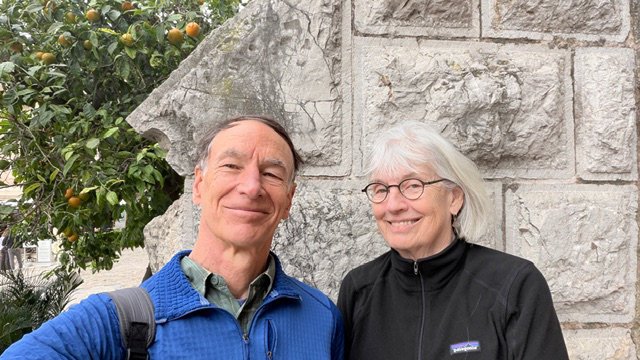
As a high school student in Neenah, Wisconsin, graduating in 1971, I was immersed in the energy and excitement of the environment, conservation, and Earth Day. "Sand County Almanac" was assigned reading in a couple of my high school classes (including my father's). Our family practically lived in the outdoors, taking long family vacations camping, hiking, and canoeing around the country. Conservation was part of our DNA, so Aldo's book was well-studied.
As a first semester freshman at the University of Wisconsin in 1971, I signed up for Environmental Studies 101, and noticed that the instructor for one of the sections was a Leopold. So of course I signed up for that section, not knowing which Leopold it might be. It turned out to be Estella (the youngest daughter), on sabbatical from the US Geological Survey. She almost immediately became a mentor and guiding light right when I was trying to figure out my life and career trajectory. I was planning to spend the following summer climbing, hiking, and studying nature in the Wind River Mountains of Wyoming, and Estella suggested I get in touch with her brother Luna who was building a home in the Pinedale area and leading a number of research projects there with several of his students from Berkeley. I connected up with him, and ended up spending the following three summers in the Pinedale area. At first, I worked with him on several research projects (as well as helping out on the house-building project) and enjoyed the steady parade of Leopold family members, students, friends, and colleagues that passed through. In following summers, I carried out other studies on my own in the Wind River Mountains, but always under Luna's sage mentoring. The first became my undergraduate honors thesis, the second became my master's thesis (also at UW) and various other studies all gave me invaluable experience in the art, science, and joy of doing field research. All were published in scientific journals and pointed me down a road as a scientist.
After three years as a researcher at the University of Arizona, I was ready to go back and get my doctorate. By that time Estella had moved to the University of Washington to lead the Quaternary Research Center. Together with Cathy Whitlock, we became her first two graduate students, and I spent four wonderful years working closely with Estella and immersed in the excitement of academic collegiality and research. Upon graduation, the vicissitudes of the job market saw me taking a post-doc position as an ecologist with a large conservation organization (Massachusetts Audubon Society) rather than in academia. Estella strongly encouraged me to explore that direction, and I soon realized I had landed well.
After thirteen years at MAS, I had become an expert in prescribed burning, conservation biology, and paleoecology. I moved back to Seattle to take a position with The Nature Conservancy and sought affiliate faculty appointments in Biology and Forestry at the University of Washington. Needless to say, I was delighted to return once again to a greater proximity to Estella and her colleagues. She invited me to join her on the Stewardship Advisory Committee at the Leopold Foundation, where I returned on a regular basis to learn and advise on restoration endeavors there.
I remained in close contact with Estella ever since, co-authoring a scientific paper with her based on some of our earlier research together, spending time with her in the San Juan Islands (an area near and dear to both of us), and enjoying the warmth of our long association and friendship, growing from mentor-student to professional colleagues and friends.
My association with ALF—an entity that was so treasured by Estella—continues to be one I have fostered both because it embodies a cause I strongly embrace, and it provides a tangible way to give back and honor the Leopold family and all they did. I am grateful to continue to help support the advancement of the land ethic, which has fundamentally shaped the conservation world, and on a much more personal level, shaped and transformed my own life in so many ways.
Learn more about different ways to give here.
Explore the stories of Leopold Foundation donors, Gary Meffe, and Jim Van Ness.


.svg)

The Aldo Leopold Foundation was founded in 1982 with a mission to foster the Land Ethic® through the legacy of Aldo Leopold, awakening an ecological conscience in people throughout the world.
"Land Ethic®" is a registered service mark of the Aldo Leopold Foundation, to protect against egregious and/or profane use.


Stay connected through our down-to-earth e-news.