

.svg)

Nature needs YOUR land ethic!
Stay connected through our down-to-earth e-news.

Guided by Aldo Leopold’s idea of the Land Ethic®, we champion both tangible and philosophical transformations for those dedicated to conservation, promoting responsible land stewardship and safeguarding our natural community.
At the core of the Aldo Leopold Foundation is a group of dedicated conservationists. We aim to bridge the wisdom of pioneering conservationists with the pressing needs of the present. Our approach is rooted in inspirational storytelling, promoting a land ethic and celebrating successes that inspire and empower individuals to make a difference. We value diverse perspectives as we work to preserve the natural world for future generations.


We offer a variety of programming, from in-person tours and exhibits to virtual events and webinars. No matter your interests, there are plenty of ways to engage.


Your support upholds and advances our mission of environmental stewardship. We deeply appreciate every contribution and invite you to join our mission by giving today.

Want to learn more about conservation? Our robust library of digital resources contains information for learners of all ages, as well as materials for educators.

In his book, A Sand County Almanac, Aldo notes the arrival of geese in March, and the blooming of silphium in July. Phenology is the study of the timing of these seasonal events and is a Leopoldian tradition that continues to help build deeper relationships with the natural world. The 2027 calendar is a vibrant guide to the natural wonders unfolding each month. Treat the nature lovers in your life or start a tradition of your own!
See a spectacle of cranes behind the Shack! Tickets for crane tours are available for purchase below ↓
Crane tours during the Great Midwest Crane Fest—Celebrating Community and Conservation are SOLD OUT. General admission tickets are available for the festival on November 14-15, 2026 in Baraboo, Wisconsin.

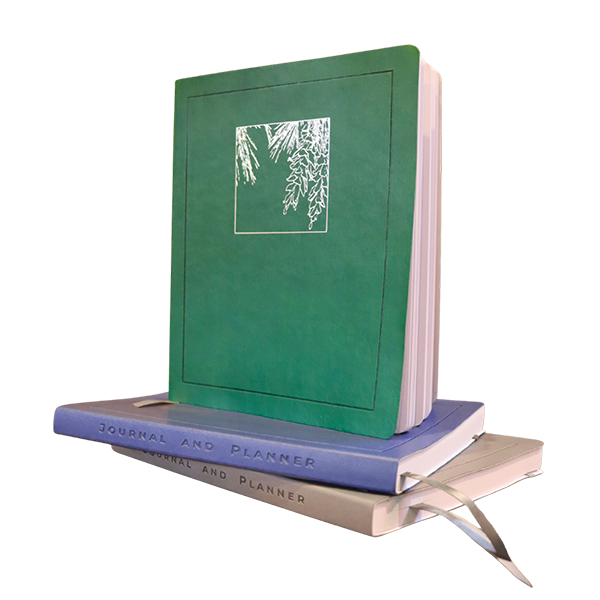
Our new journal and planner features monthly Leopold quotes and original nature illustrations by former artist Max Sorenson. Let the seasonal meditations and gorgeous sketches connect you to the biotic community, no matter what you put on the page. The journal and planner is suitable for use in any year―or over multiple years!


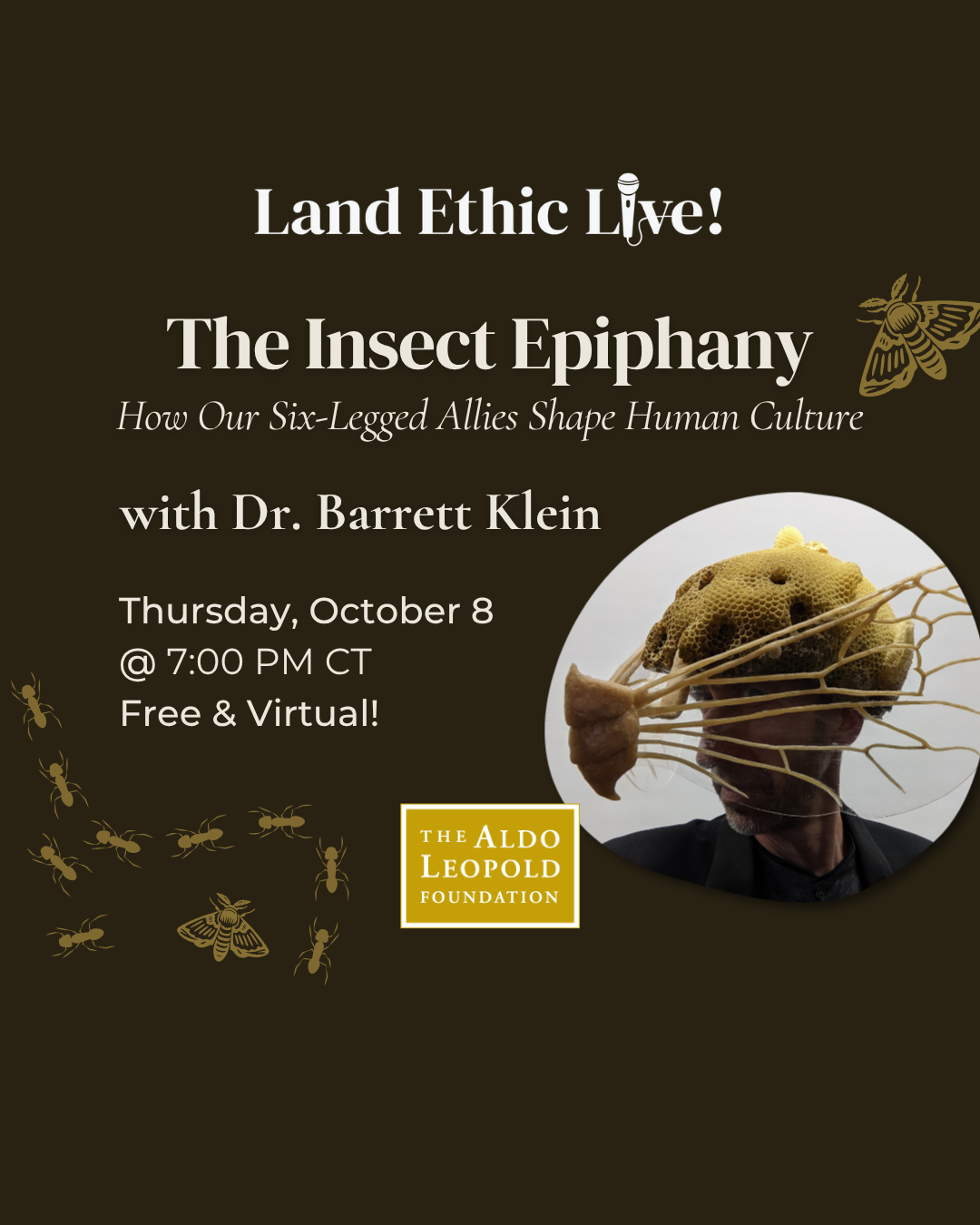
For every human being on the planet, there are roughly 1.4 billion individual insects. But aside from the odd pesky mosquito or charming bumble bee, how often do we humans really consider them?
According to entomologist Barrett Klein, it ought to be more often! Throughout history, insects have markedly shaped human culture—from serving as valuable sources of food, pigment, and fiber, to inspiring our greatest feats of engineering, art, and design. And though they are vastly underappreciated and facing significant challenges today, we still stand to learn much from their abundant wisdom.
Join us on October 8 as entomologist, artist, and author Barrett Klein (Insect Epiphany) brings the fascinating world of insects to the Land Ethic Live stage, sharing how these six-legged creatures have shaped human culture for millennia and how learning to appreciate their vital roles in the biotic community can strengthen our own land ethics. Enjoy a lively presentation from Barrett followed by audience Q+A and, if we're lucky, a peek at Barrett's incredible artistic collaborations with insects!

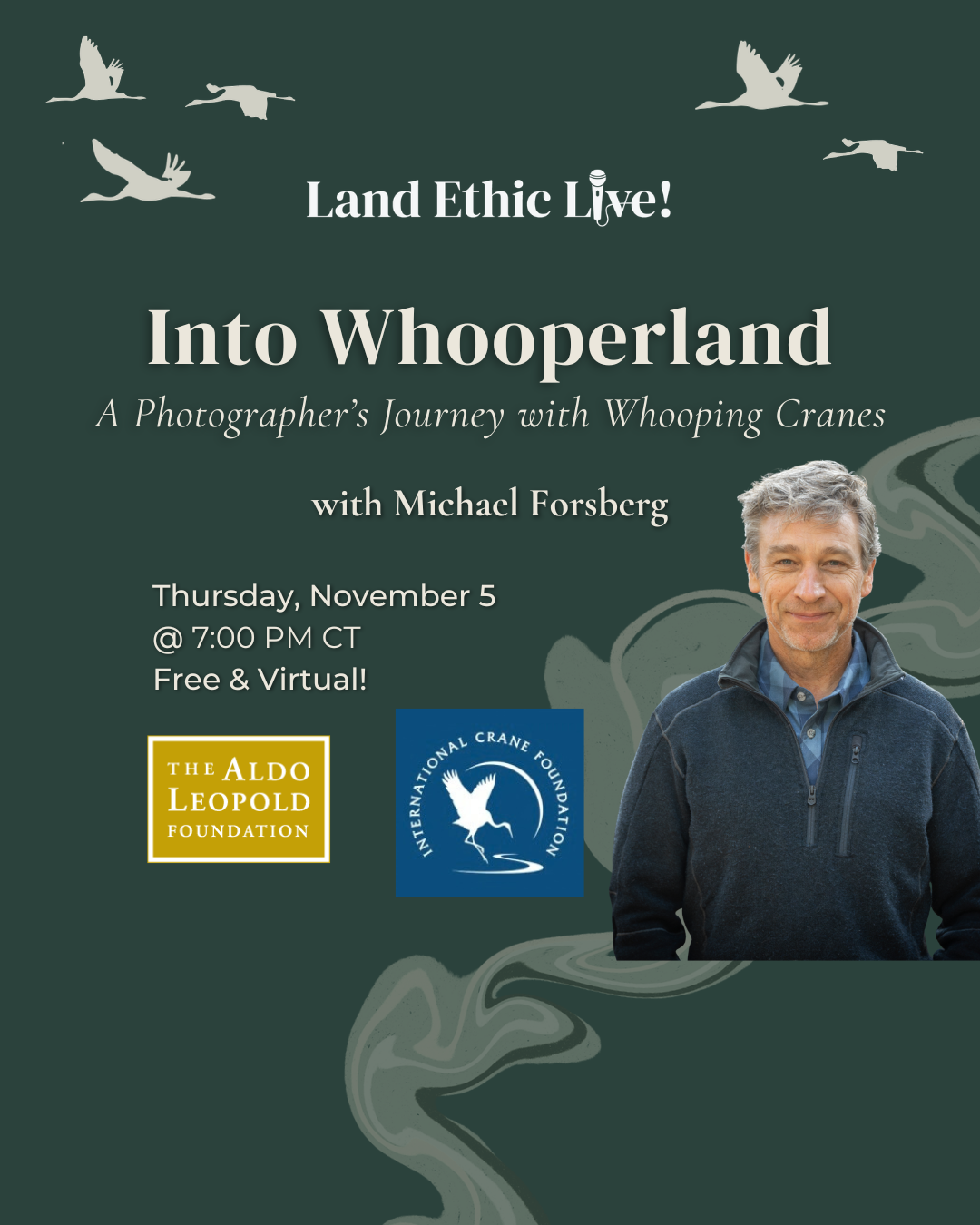
Renowned photographer Michael Forsberg spent the last five years camera-in-hand exploring the natural history of Whooping Cranes across the continent, meeting people who love them, and discovering how these tall, magnificent, and rarest of cranes are navigating our 21st-century world.
In this multimedia presentation, Michael will take you on a wild, wonderful, and sometimes heartbreaking journey from their wintering grounds along the Texas Gulf Coast to their remote nesting grounds in northern Canada, and on migration through the heart of the Great Plains.
Join us on Thursday, November 5 at 7 pm for a special edition of Land Ethic Live, presented in conjunction with the International Crane Foundation, as we gear up for this year's Great Midwest Crane Fest! Whether you'll be joining us in-person for the crane festivities November 14-15 or prefer to stay cozy at home this Crane Fest weekend, Michael's free, virtual presentation is a great way to kick off the migration season!
What do you see when you look at a rock? A mountain? A sandy beach?
For some, these are merely a blank stage for the more interesting goings on of nature. For geologists, though, they are surprisingly active figures in a long and tumultuous earthly history that is still unfolding.
This difference is thanks to what geologist Marcia Bjornerud calls seeing in four dimensions—the habit of looking at landscapes not only for the features and lifeforms they support today, but as products of ongoing change over a much vaster, more-than-human timescale. Learning to see this way, Bjornerud contends, is one key to becoming a better environmental citizen.
Join us on September 10 as geologist and author Marcia Bjornerud—author of Turning to Stone and Timefulness—takes the Land Ethic Live stage to share how thinking like a geologist can expand your worldview and provide insights into the environmental crisis. Tag along as we explore geology through the lens of Aldo Leopold's own "Sand County," a region shaped by a rich history of sandstone bedrock, glacial meltwaters and great rivers.
This program is a special presentation brought to you, in part, by our promotional partners at High Country News—the nation's leading source of news on the West.

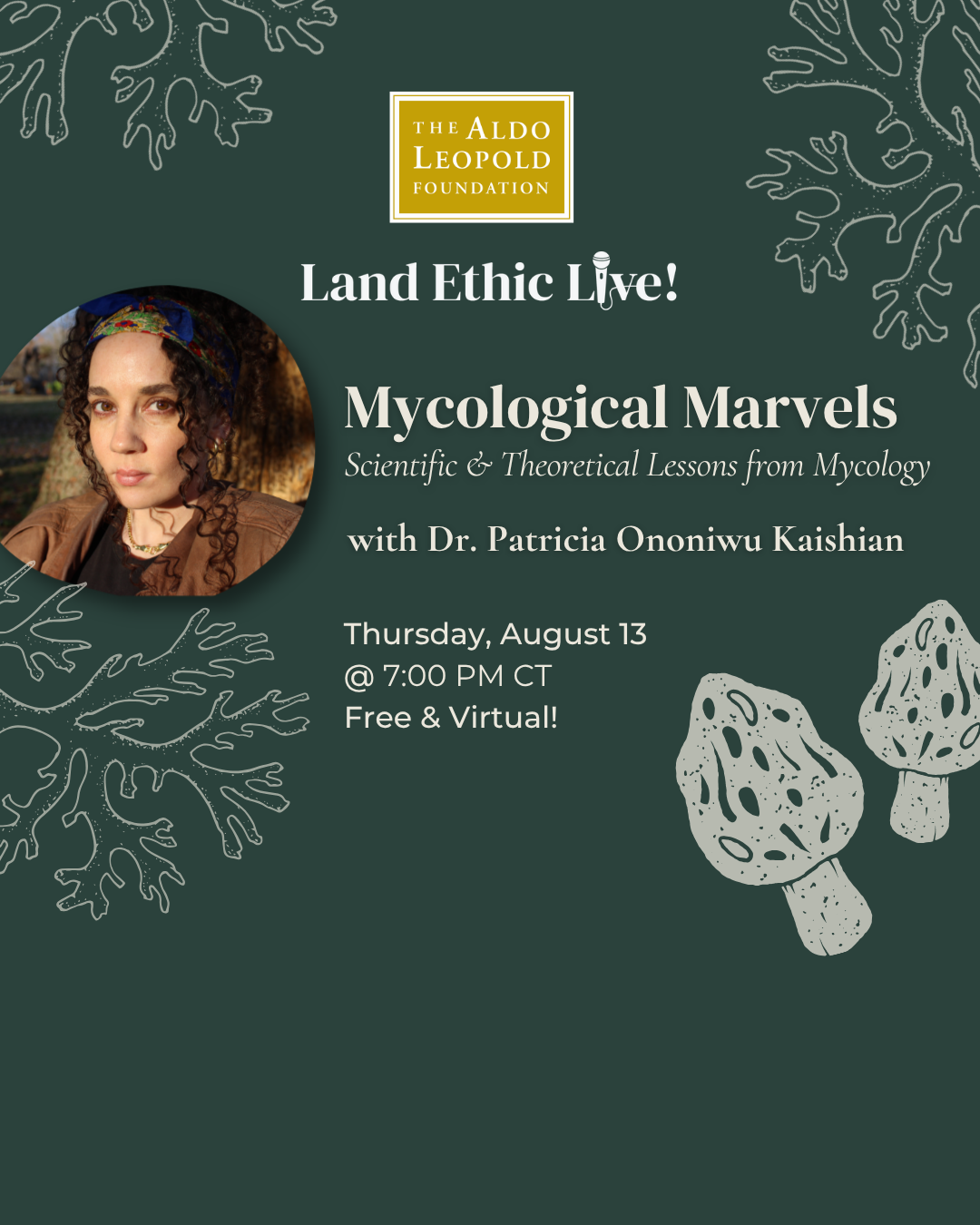
Do you consider the fungus among us?
Our scientific understanding of mushrooms and other fungi has been shaped and impeded by mycophobia, a condition of fear and revulsion to the peculiarities of this kingdom of life. However, fungi show us cooperative, alternative, entangled, interdependent, and more-than-human modes of living that are worth studying, imitating, and learning from.
Join us on Thursday, August 13 to hear from mycologist Dr. Patricia Ononiwu Kaishian—author of Forest Euphoria: The Abounding Queerness of Nature—as she shares the fascinating, though often-misunderstood, world of fungi and how rethinking our relationship with these incredible organisms can help us appreciate and build a healthier, more diverse biotic community. Enjoy a presentation featuring Kaishian’s insights from a lifetime spent studying these underappreciated species and stick around for the live Q+A to talk all things fungi!
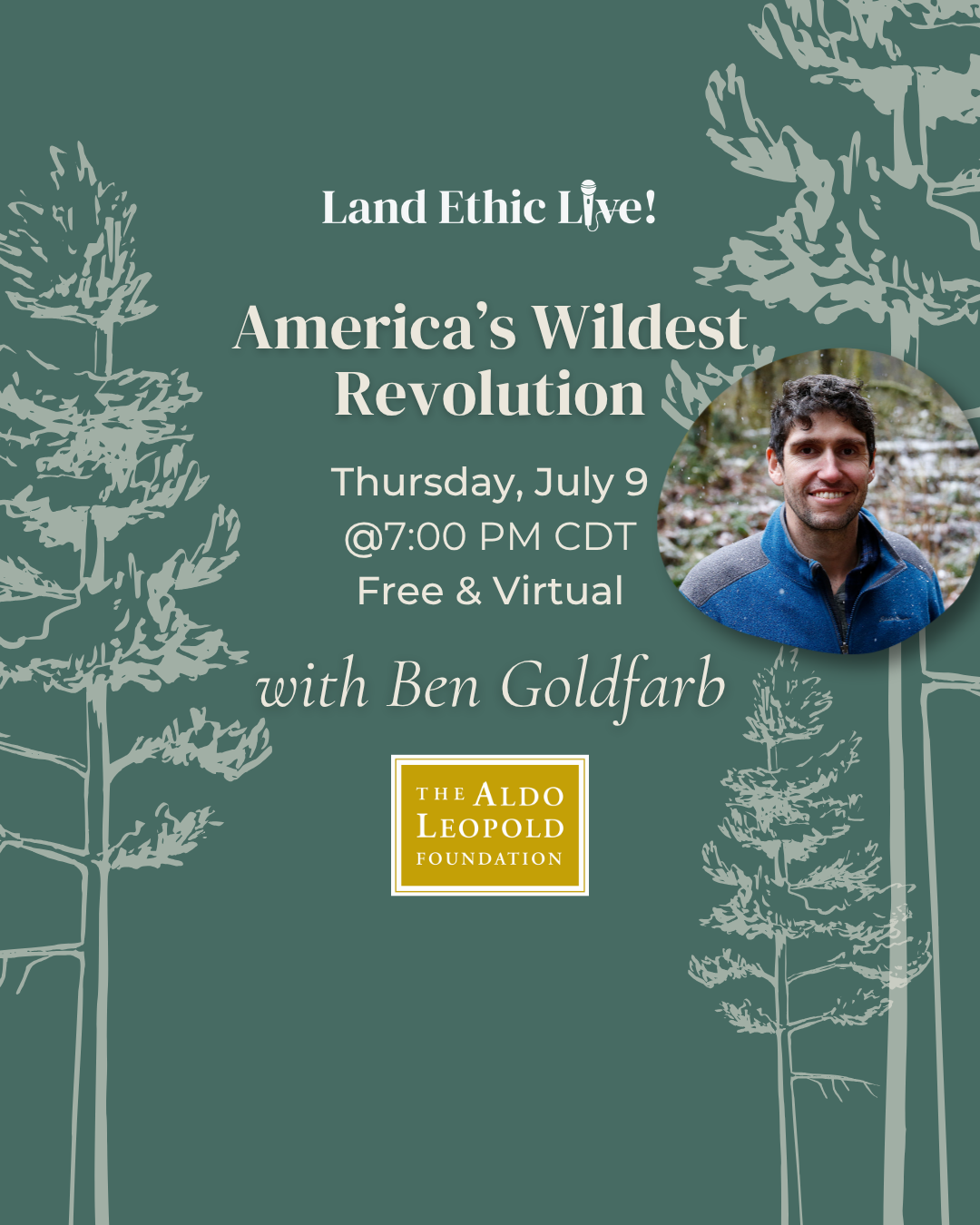
In its 250-year history, America has birthed plenty of revolutionaries. In the realm of conservation, though, few names come close to Aldo.
In an era when extractive land use was threatening America’s lands, waters, wildlife, and ways of life, Aldo Leopold took innovative action to change how we relate to and treat the land. From securing the nation’s very first wilderness area in the Southwest to pioneering prairie restoration and wildlife ecology back home, Leopold revolutionized American conservation through a unique blend of science, spirituality, ethics, and language.
But just how did a nature-lover with a knack for storytelling come to fundamentally change how we treat the land? And is this conservation revolution over, or do we have something more to learn?
In celebration of the nation’s 250th anniversary, join us on Land Ethic Live to hear from environmental journalist and author Ben Goldfarb (Eager, Crossings) as he shares the ripples of Aldo’s revolutionary wisdom in today’s world. Listen in as Ben shares insights from his new essay about Leopold in Smithsonian Magazine’s special edition on American revolutionaries, and how Leopold intersects with contemporary environmental issues—from beavers to the roadless rule.
This event is a fundraiser for the Aldo Leopold Foundation, open only to new and existing donors. Make a gift of $25 or more to gain access.
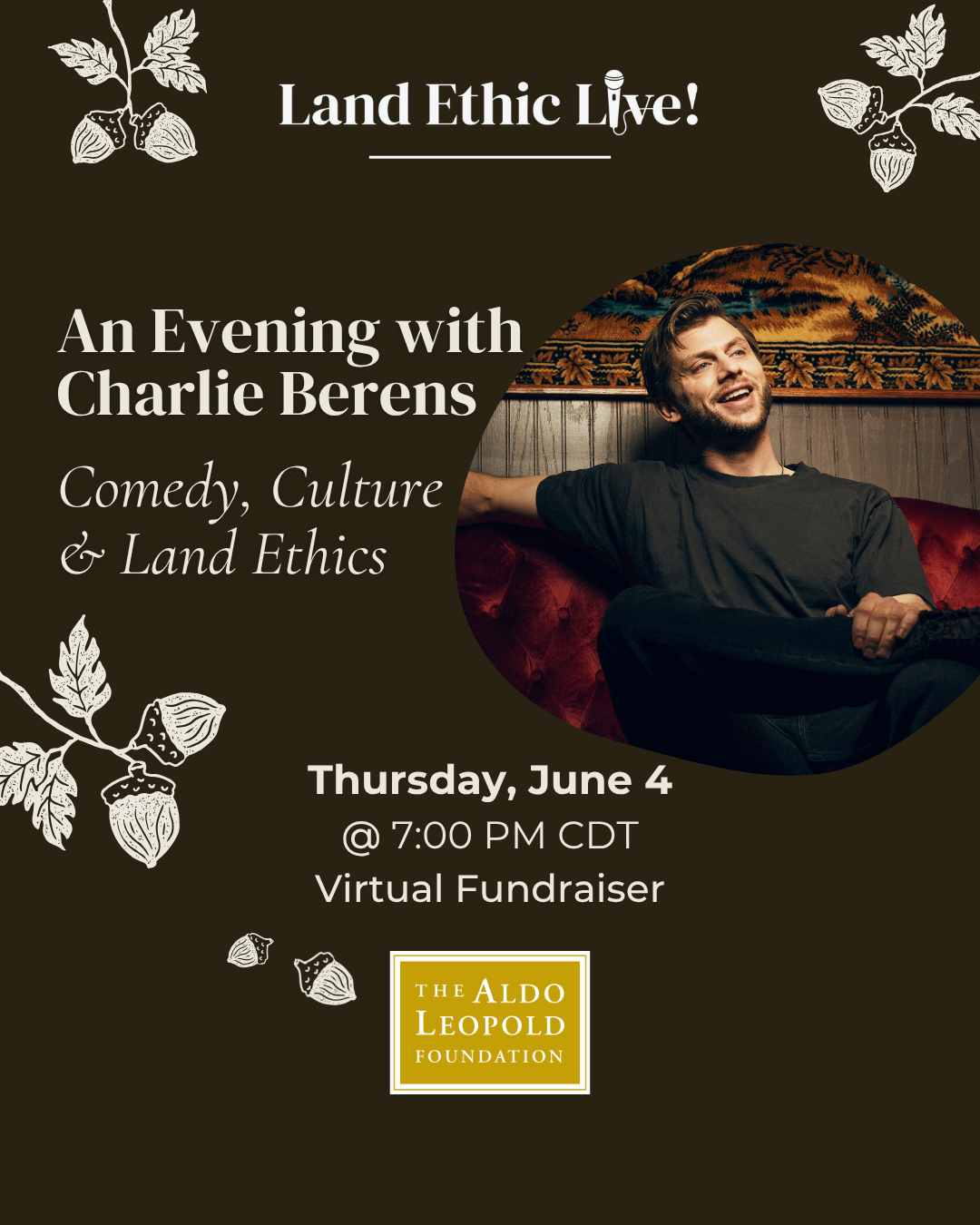
From deer camp and fishing trips to walks through the woods, spending time outdoors is a quintessential part of Midwestern culture. And no one knows that better than Wisconsin’s own Charlie Berens—a comedian, best-selling author, and journalist known for his wildly popular sketch and stand-up comedy that spotlights the Midwest (Manitowoc Minute).
Join us for a donor-exclusive special edition of Land Ethic Live where we’ll talk with Charlie about how he uses comedy to connect people, how he explores —and exploits— Midwestern culture, and how his own land ethic is evolving. Laughs and learning guaranteed—it'll be a hoot – Oh, yeah, you betcha!


Aldo Leopold was a pioneering American ecologist, forester, and environmentalist who profoundly influenced the modern conservation movement. Best known for his book A Sand County Almanac, Leopold introduced the concept of a "Land Ethic®," emphasizing the interconnectedness of humans and the land they inhabit, which serves as the cornerstone of the Aldo Leopold Foundation’s modern-day mission. Today, Leopold's legacy continues to inspire and guide our efforts toward conservation and harmonious coexistence with the natural world.
The Aldo Leopold Foundation was founded in 1982 with a mission to foster the Land Ethic® through the legacy of Aldo Leopold, awakening an ecological conscience in people throughout the world.
"Land Ethic®" is a registered service mark of the Aldo Leopold Foundation, to protect against egregious and/or profane use.


Stay connected through our down-to-earth e-news.